Erasmus Days
news
25.09.2025
This year, Ms Gabrielle Marie da Cunha and CFA LEEM apprentices will once again celebrate Erasmus Days at their respective engineering schools, […]
Read more
Select courses to see them appear in this window.
View all coursesThis program includes production, extraction, and purification of biological products using microorganisms or human, animal, or plant cells. It also covers mastery of analytical techniques and methodologies to ensure quality control and adherence to best practices in bioprocesses.
Finally, Polytech engineers are introduced to corporate life and career management, with our training placing particular emphasis on their communication, updating, innovation, and team leadership skills.
The Marseille-Luminy campus is a major research center in the field of life sciences, recognized in the health and environmental sectors. This field maintains strong ties with academic and industrial research. The professors come from scientific and technological laboratories of major research organizations with activities focused on the foundations and applications of biotechnology, such as the CNRS, INRAe, INSERM, and IRD.
Students thus have access to first-rate scientific facilities and platforms.
Speakers from French and foreign companies in the biotechnology sector participate in the lessons.
Continuous assessment in the form of written or oral exams
Evaluation of personal and/or collaborative work completed during workshops
Thesis with defense before a mixed jury (teachers and professionals) for the evaluation of the work completed in the host company
Our apprenticeships offer training in development, production, quality, regulatory affairs, legal affairs, health economics, clinical research, pharmacovigilance and marketing.
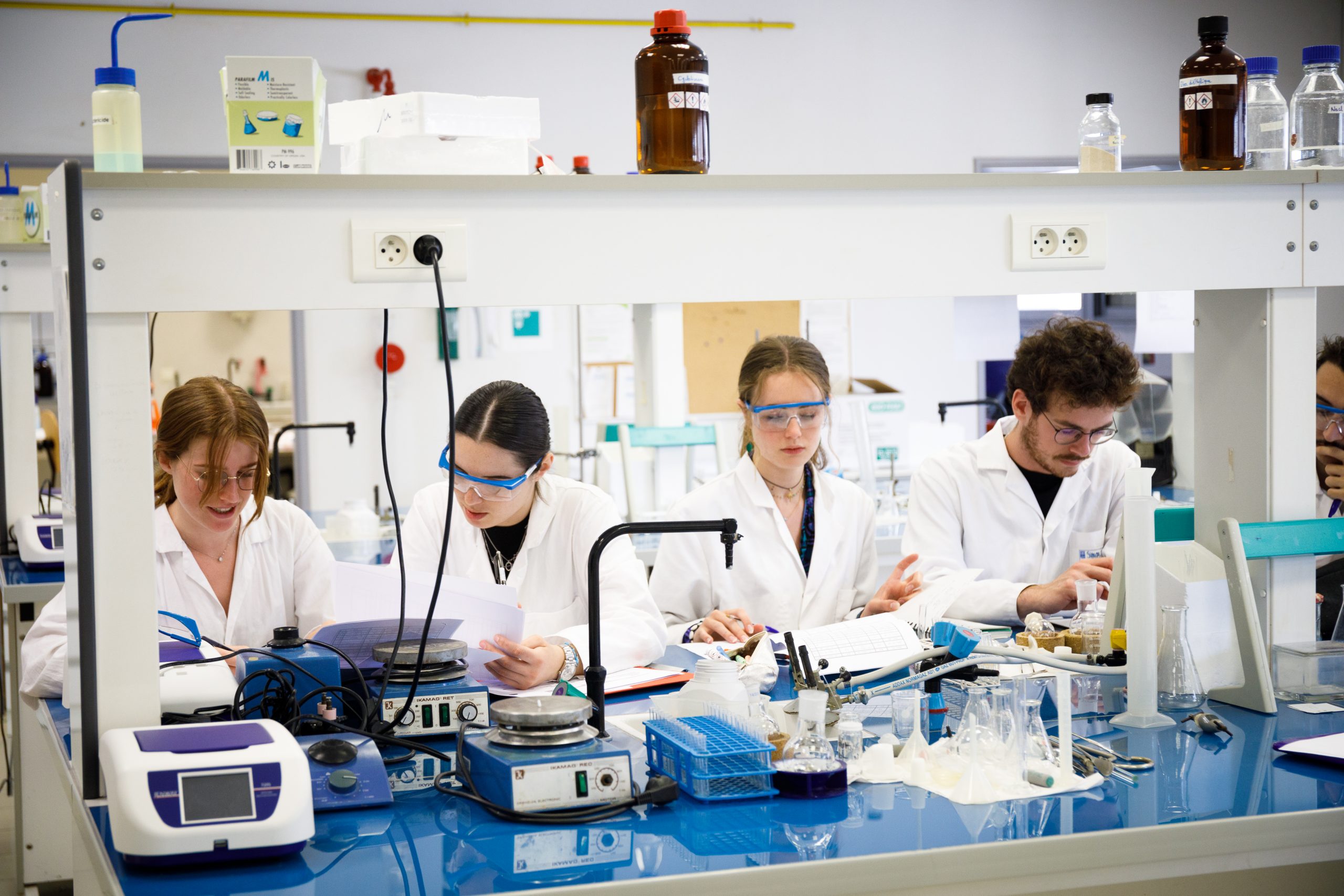
The fifth year of the Engineering degree at Polytech Marseille, specializing in Biological Engineering, offers 400 hours of practical work and lectures to acquire the essential theoretical and technical skills in the field and strengthen understanding of theoretical concepts.
The educational objective is to train Biotechnology Engineers who master all stages of design in research and development, through to the production and marketing of a biotechnology product. They know how to operate facilities and processes, adhere to good production practices, and ensure quality. They will be able to perform the following activities:
· Analyze problems in the field of biotechnology, whether in terms of processes, composition analysis, etc., with a view to drafting specifications.
· Propose solutions to scientific and technical problems in the field of biotechnology, considering societal and environmental issues.
· Design, produce, and implement biological products and processes in an evolving and innovative industrial and technical context, considering societal and environmental issues.
· Establish or monitor specifications for a biotechnology project, considering needs and constraints, safety, and ethics.
• Design and implement scientific methods and protocols in the field of biotechnology.
• Conduct and optimize biological or biotechnological studies, processes, and services.
• Estimate the costs of studies and/or installations that are the subject of technical proposals in the fields of biological engineering and biotechnology.
• Manage a project in the field of biotechnology.
• Produce written and oral reports following analyses or implementations.
• Manage quality for the implementation of bioprocesses in compliance with regulations and good industrial practices.
• Advise professionals and propose technical solutions and appropriate equipment to achieve their objectives.
• Manage a private or public scientific, or technical research and development activity within a laboratory or research platform.
• Manage a production line (‘Up Stream Process’ or ‘Down Stream Process’) in an industrial biotechnology facility.
• Manage teams and manage budgets.
Be under 25 years of age to benefit from a professionalization contract, or be eligible for an exemption from age 26, and have completed one of the following degrees:
Entry Profiles of Students*: Life Sciences, Biology, Process Engineering
*Please note that the PeiP A preparatory programs, including that of Polytech Marseille, do not provide access to the Biological Engineering major at Polytech Marseille. Others
Students over 30 years of age are eligible for a professionalization contract.
People with disabilities interested in this program are invited to contact us directly to discuss the required access requirements.
POSSIBLE FURTHER EDUCATION:
For Master’s and Engineering programs: Extended studies at university (in France or abroad) from the Master’s level or at engineering schools.
For BTS/DEUST programs: Upon graduation, you can enter the professional world directly or complete your training with a professional bachelor’s degree.
ACCESS TO TRAINING:
Application deadlines: Application deadlines vary depending on each program. Log on to the partner institution’s website to find out the dates. As soon as the dates are set by the institutions, the CFA will display them on its website, and applications will be submitted on Ecandidat or any other designated platform.
Training access times: The start date of each program varies. On average, the time between application submission, selection interviews, confirmation of pre-admission by the academic supervisors, signing of the apprenticeship contract, and the start of the program can vary from 3 to
7 months. Depending on the desired training program, you should calculate the number of weeks between the application submission and the start of the program, as specified on the website.
Admission process: application and interview.
Signing an apprenticeship or professionalization contract with an employer.
FINANCING
For apprenticeships or professional training contracts, the cost of training is financed by the France Compétences agency through the company’s OPCO (depending on the applicable collective bargaining agreement). No training or registration fees will be charged to the beneficiary of the apprenticeship or professional training contract.
The CFA assists companies in ensuring that the OPCO covers the cost of training. Depending on the circumstances, duly indicated on the training form, a remaining charge may be applied beyond the amount financed by France Compétences.
Special conditions apply to public institutions (contact the designated advisor).